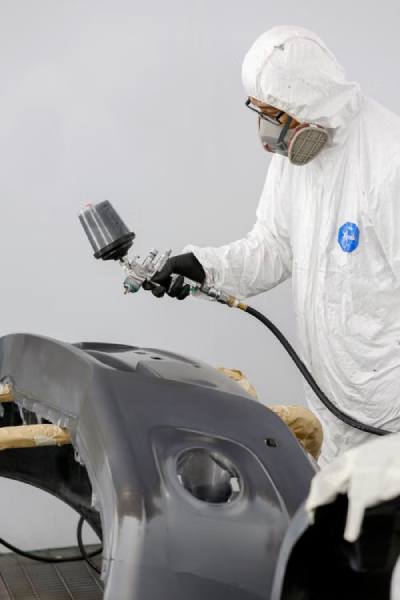
Park a repaired car outside on Folsom Boulevard in July. Leave it there through August. Do that for two years, and something starts to happen to one panel that is not happening to the others.
It gets chalky. The color goes a half shade lighter. Run your hand across it, and the surface feels dry instead of slick. A cheap auto body repair does not fail in the shop. It fails on your driveway, slowly, in a way you almost do not notice until you see the car in the flat morning light and the door no longer matches the fender.
Sacramento averages triple-digit stretches every summer. The National Weather Service records dozens of days above 90 degrees here each year. Paint sitting in that heat, under that UV load, is being tested constantly. Relux Collision has seen cars come back three summers after a discounted repair, with one panel visibly dying while the factory paint around it holds up fine. The car did not get unlucky. The paint got cheap.
What the Sun Actually Does to a Repaired Panel
Automotive paint is not one layer. It is a stack. Primer, then basecoat for color, then clearcoat on top. The clearcoat does the hard job. It takes the UV hit so the color underneath does not have to.
Cut corners anywhere in that stack, and the sun finds the weak spot.
Here is what fails first:
- Thin clearcoat, sprayed in one pass instead of two, wears through in a few seasons.
- Cheap, clear, without UV inhibitors, lets radiation reach the color layer directly.
- Poor prep leaves contamination under the paint, and heat pushes it upward.
- Skipped primer means no barrier between bare metal and everything above it.
Once the clear begins to break down, the basecoat oxidizes. Reds turn pink. Blacks turn gray. Metallics go dull and flat.
You cannot polish that back. The color itself is gone.
Why Cheap Auto Body Repair Looks Perfect on Day One
This part frustrates people, and I understand why. The car leaves the shop looking correct. The panel shines. The color reads right under the overhead lights.
Fresh paint hides almost everything. Gloss covers thin film builds. A quick machine polish makes weak clear look identical to strong clear for the first six months.
So how would you even know?
You would not. Not immediately. That is what makes this different from a bad bumper alignment or a panel gap you can spot in the parking lot. Bad paint keeps its secret through the first winter, and then Sacramento hands it a July.
Let’s break it down. The shop that quoted you 40 percent under everyone else saved that money somewhere. Ask where.
The Prep Work You Are Really Paying For
Most of the cost in a paint job is not the paint. It is the hours spent before any color goes on the car.
A proper repair includes:
- Sanding and feathering the damaged area so no edge shows through later
- Cleaning the surface to remove wax, oil, and road contamination
- Priming bare metal so nothing corrodes under the finish
- Sealing so the basecoat sits on a uniform surface.
- Spraying color in controlled coats
- Applying clearcoat with enough film build to last
- Curing the panel properly instead of rushing it out the bay door
Skip step three, and rust starts under paint that still looks glossy. Rush step seven, and the finish never reaches full hardness.
Curing deserves a moment. Paint does not dry the way a wall dries. It cross-links, and that chemical process needs time and controlled heat. A shop pushing volume can shortcut this. The car goes home soft, and soft paint collects swirl marks, water spots, and heat damage faster.
Color Matching Is Not a Code Lookup
Your paint code is a starting point, not an answer.
A four-year-old silver Camry in Sacramento does not wear the same silver it left the factory with. UV has faded it. Heat has shifted it. Two identical cars parked in different spots for four years will not match each other anymore.
So a shop spraying straight from the code number is guessing.
Good paint work blends. The color goes into the repaired panel and then feathers into the adjacent panels so your eye never finds the transition line. It costs more. It takes longer. It also means the repair still looks invisible after the next heat wave, instead of announcing itself.
Relux Collision holds I-CAR Gold Class training and backs repairs with a limited lifetime warranty. That warranty matters most on paint, because paint is where cheap work eventually shows.
What Faded Paint Costs You Later
Think past the appearance for a second.
A faded panel drops your resale value. Any buyer, any dealer, any appraiser sees a mismatched door and assumes an accident and a bad repair. They are usually right.
Clearcoat failure also stops protecting the metal. Once oxidation reaches bare steel, you are not looking at a paint problem anymore. You are looking at rust.
Repainting a failed panel costs roughly what the original job should have cost. So the discounted repair did not save you money. It moved the payment two years down the calendar and added interest.
Protecting Paint You Already Paid For
If the repair was done right, keep it that way.
- Wash regularly to clear the dust and pollen that hold heat against the finish.
- Park in shade when you can; even partial shade helps.
- Skip automatic brushes, which cut micro scratches that let UV bite deeper.
- Consider paint protection film on the hood and bumper surfaces that take the worst of the sun.
Paint protection film and ceramic-style protection have grown popular in Sacramento for exactly this reason. Relux Collision offers paint protection film, car wraps, and auto detailing for owners who want the finish to outlive the loan.
Next Steps Before Your Next Summer
Look at your car in daylight this week. Compare panels. Check the roof, the hood, and the trunk lid, since horizontal surfaces take the most direct sun.
If one panel looks tired and the rest do not, you already have your answer.
Call 916-621-5306 or request a free estimate at reluxcollision.com/get-a-quote. A repair done properly should still match in five years, not fade out in two.
