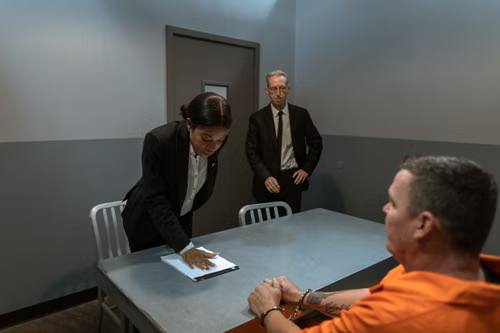
Sitting in a courtroom chair about to take the stand feels different than anything else you will experience. Your mouth goes dry. Your heart pounds. You are aware that everything you say would be scrutinized, analyzed, and interpreted in such a way that would decide whether you would be behind bars or set free. It is here that the importance of a criminal defense lawyer becomes most pronounced. Everything you would have done before taking the witness stand could make all the difference in how you testify.
Testimony is often thought of as just recounting one’s version of events. Not so, according to an experienced criminal defense attorney. They are aware that the prosecutor will twist your words, that a hasty response may seem to be an evasion, and that an emotional reaction will make jurors believe you guilty. This is why preparation matters. This is what separates a criminal defense attorney who shows up from one who actually fights for your freedom.
Piotrowski Law – West Palm Beach understands that testifying on your own behalf is one of the most critical decisions you will make. It is risky. But sometimes it is necessary. Your attorney does not leave that risk to chance.
Understanding the Risks
Before any other step is taken, a defense lawyer talks to you about what takes place when you testify on the witness stand. He tells you the bitter truth that no one wants to know. After you have testified, the prosecutor is allowed to cross-examine you. Anything he asks you will pertain to your case, and he will be looking for inconsistencies.
He will ask you questions meant to show you as a liar or a criminal. Some clients should never testify. Some cases are stronger when the defense rests without putting you on the stand. A good criminal defense attorney evaluates this honestly, not just with your wishes in mind. If testifying hurts more than it helps, your attorney will tell you.
But if testifying is necessary, preparation begins immediately.
Building Your Narrative
You have a story. Your attorney’s job is to help you tell it clearly and consistently. They will sit with you for hours, sometimes multiple sessions. They ask you about every detail that matters to your case. They ask you about things that do not seem important. They ask you about things that are embarrassing or make you look bad.
Here is why. A prosecutor will definitely ask about these things. Your attorney needs to know your answers first. They need to identify inconsistencies. They need to spot places where your memory is fuzzy. They need to understand where your testimony is strong and where it is weak. Then they work with you to sharpen it.
This is not about coaching you to lie. A criminal defense attorney cannot do that, and a smart one will not. Lying under oath is perjury. It ruins cases. What your attorney does is help you tell the truth in the clearest, most compelling way possible.
Handling the Prosecutor’s Questions
The prosecutor will cross-examine you. He will be aggressive. He may shout at you. He may make you wait a long while before asking the next question. He may ask the same question in five different ways to see whether you would change your answer. They might present documents or evidence and ask how you explain it.
Your criminal defense attorney prepares you for this. They do mock cross-examinations. They play the prosecutor. They ask you the hardest questions imaginable. They push you, challenge you, and try to rattle you. They do this in the safety of their office so that when it happens in court, it does not surprise you.
During these practice sessions, you learn techniques. You learn to pause before answering. You learn to ask for clarification if a question confuses you. You learn to say “I do not remember” instead of guessing. You learn that it is okay to say “I do not know.” These small habits protect you.
Managing Your Emotions
Testifying brings emotions. You are nervous. You might be angry at the prosecution. You might feel ashamed about things you have to admit. You might want to argue with the prosecutor. These emotions are normal. But they destroy testimony.
A jury watches your face. They listen to your tone. If your demeanor appears angry and evasive, they will think that you are guilty. If your demeanor appears fearful, then they will think there is something that you are trying to hide. This is something that your defense lawyer will explain to you. This is because your defense lawyer will teach you how to control your emotions.
This does not imply that you do not express any emotions at all. Complete detachment looks fake. But you need control. Your attorney works with you to find that balance.
Clarifying Key Facts
Certain facts are critical to your defense. Your attorney will prepare you to explain these facts clearly. Maybe it is where you were at a specific time. Maybe it is a conversation you had. Maybe it is evidence that exonerates you. Your attorney makes sure you know these facts cold. You do not stumble. You do not hesitate. You explain them clearly and with confidence.
Your attorney also prepares you for any areas where your testimony contradicts other evidence or witnesses. They address this directly. If you handle it well on direct examination, it is less damaging when the prosecutor brings it up on cross.
What Not to Say
Your criminal defense attorney teaches you what to avoid. Do not volunteer information. Only answer what you are asked. Do not argue with the prosecutor. Do not make jokes. Do not try to explain things that were not asked. Do not gesture wildly or pace around. Do not make faces at people in the courtroom. These small behaviors can turn a jury against you.
Most importantly, do not say things outside the record before you testify. What you say to other people in the courthouse can be reported. What you say in the hallway can be overheard. Once you are prepared, you stay prepared.
The Day of Testimony
When you finally take the stand, everything your attorney taught you comes together. You remember the techniques. You stay calm. You answer questions directly. You do not get baited into arguments. You tell your story clearly.
Your criminal defense attorney sits nearby. They watch every reaction from the jury. They listen for problems. They make notes. If the prosecutor goes too far, your attorney objects. Your attorney supports you throughout.
Testifying is terrifying. But with proper preparation, you can do it. You can tell your story truthfully and effectively. You can help your own case instead of hurting it.
This is what separates good representation from great representation. Any criminal defense attorney can tell you what to do. The best ones make sure you know how to do it.
